Latin America
What we do
InterJust works to ensure that survivors of atrocity crimes in Latin America have viable, cross-border pathways to justice, and that no perpetrator can evade accountability.
Latin America is experiencing a resurgence of authoritarian governance. Across the region, governments are systematically restricting fundamental freedoms, targeting political opponents, and resorting to violence against their own populations. In several countries, independent investigations have found that this conduct amounts to crimes against humanity.
Survivors of torture, enforced disappearance, arbitrary detention, persecution, and other serious violations rarely find justice at home.
InterJust brings these cases to courts. Under the principle of universal jurisdiction, courts in third countries can prosecute the most serious international crimes regardless of where they were committed, enabling accountability even when justice is blocked at home.
Working with survivors and local partners, we identify where cases can be filed, conduct investigations, track perpetrators across borders, and equip survivors with the tools and protection they need to pursue justice safely.
Venezuela
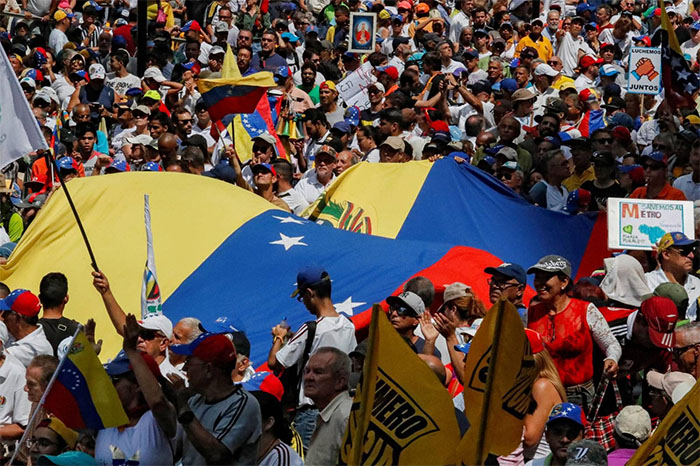
Since at least 2014, Venezuelan authorities have allegedly committed gross human rights violations against civilians, “including extrajudicial executions, enforced disappearances, arbitrary detention, torture and other cruel, inhuman or degrading treatment, including those involving sexual and gender-based violence.” These abuses have been investigated and documented in great detail by the UN Fact Finding Mission on Venezuela.
In November 2021, the International Criminal Court opened a formal investigation into the situation in Venezuela, focusing on several categories of crimes against humanity, including deprivation of liberty, torture, rape, and political persecution, reportedly committed by Venezuelan security forces since April 2017.
The Case
On behalf of two Venezuelan families whose relatives were murdered by Venezuelan security forces, the InterJust team continues its universal jurisdiction case previously filed in Argentina as part of the Clooney Foundation for Justice’s Docket initiative.
The case was initially submitted in June 2023 containing over 15,000 pages of evidence, which led to the opening of a judicial investigation into the 14 named alleged perpetrators in record time. The investigation has since advanced with unprecedented speed.
“We had lost hope, but now we see that justice is possible even against the powerful. We feel empowered and proud to be on this path to justice, thanks to the progress of this investigation.”
“Maria” (name changed), whose brother was killed during protests in Venezuela, represented by InterJust’s team in a criminal case filed in Argentina.
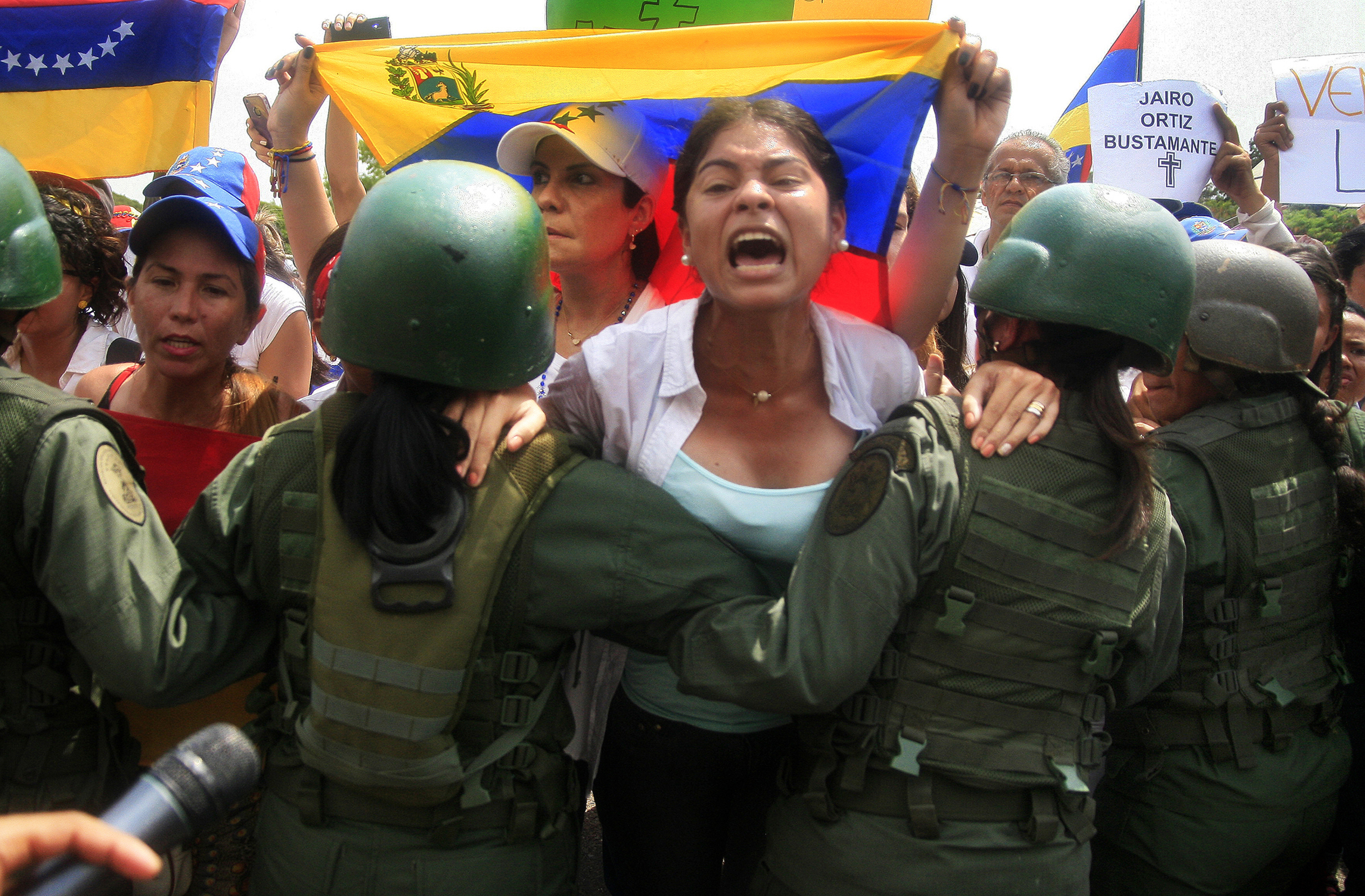
In June 2024, Venezuelan survivors and victims of crimes against humanity testified against alleged perpetrators in a landmark hearing in Buenos Airies, a significant milestone in their pursuit of justice. The case continued to move forward in September 2024, when the investigating judge issued international arrest warrants for the 14 Venezuelan officers named in our complaint. Amnesty International further strengthened the proceedings by filing an amicus curiae brief in support of the investigation.
InterJust will continue to advance the ongoing investigation in Argentina to ensure that those linked to Venezuela’s systematic policies of violence and brutality are held to account. This includes assisting the investigating judge and law enforcement in locating, tracking, and advocating for the arrest of the alleged perpetrators.
Frequently Asked Questions
What is the case in Argentina about?
This case is about holding Venezuelan officials accountable for serious crimes committed against civilians, which caused profound harm to victims and their families. We want to make sure these crimes are acknowledged and that those responsible do not escape justice.
Why Argentina?
Under the principle of universal jurisdiction, countries like Argentina can prosecute international crimes regardless of where they were committed and of their perpetrators’ nationality. Since Venezuela’s own courts will not prosecute these abuses, InterJust brought the case to Argentina, which has the legal authority to investigate crimes of this severity, and strong legal tools that allow its courts to take on cases from other countries.
Why does this case matter?
This case matters because it gives victims and their families a real opportunity to be heard and to pursue justice. It also carries broader importance: it shows that crimes against humanity should not be met with silence, delay, or impunity. The proceedings in Argentina send a clear message that those responsible for grave abuses can still face consequences, even years later.
What happens next?
The investigation is ongoing and advancing rapidly. InterJust continues to submit evidence, support survivors through the process, and work to ensure the arrest warrants are enforced, so that those named cannot simply cross a border and walk free.
El
Salvador
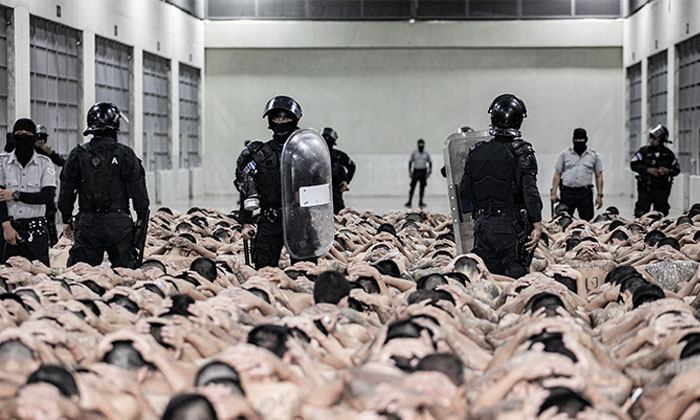
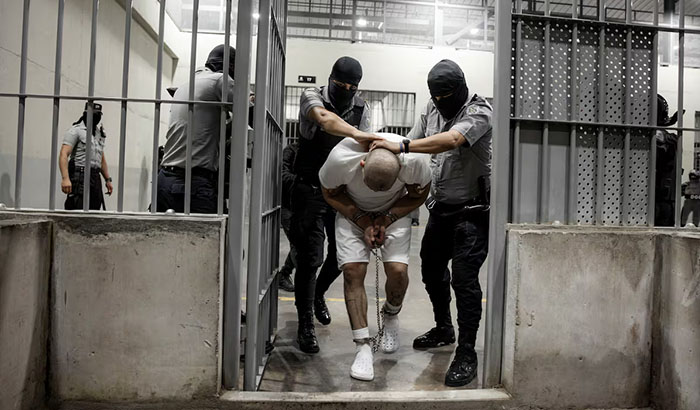
Under President Nayib Bukele, El Salvador has dismantled judicial independence, suspended basic rights, and subjected its own population to mass arbitrary detention, torture, enforced disappearances, and deaths in custody, all carried out under a State of Exception declared in 2022 and renewed ever since.
The numbers are stark. Over 89,000 people have been detained, many without evidence, legal representation, or any path to challenge their imprisonment. Hundreds have died in custody. Dissidents, NGOs, journalists, and human rights defenders face persecution, arbitrary detention, and exile.
“The State of Exception has allowed the Salvadoran government to concentrate absolute power, under which there are reasonable basis to believe that grave, widespread, and systematic human rights violations have taken place. The State’s obligation to guarantee the security of its population and eradicate violence cannot be pursued by any means or any cost.“
Ignacio Jovtis, Director – Latin America, InterJust
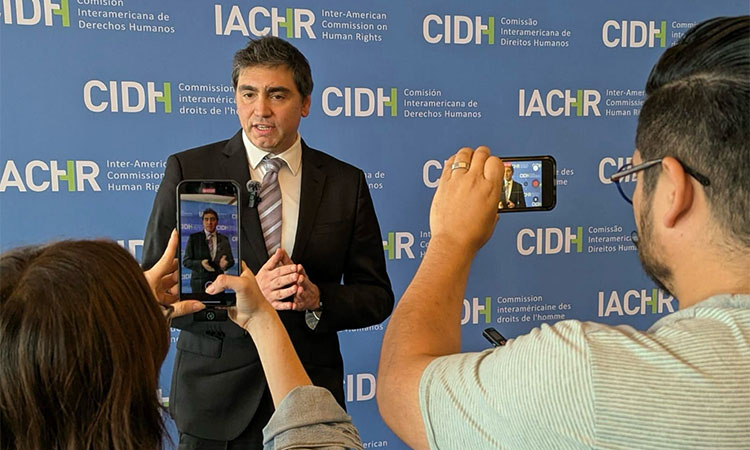
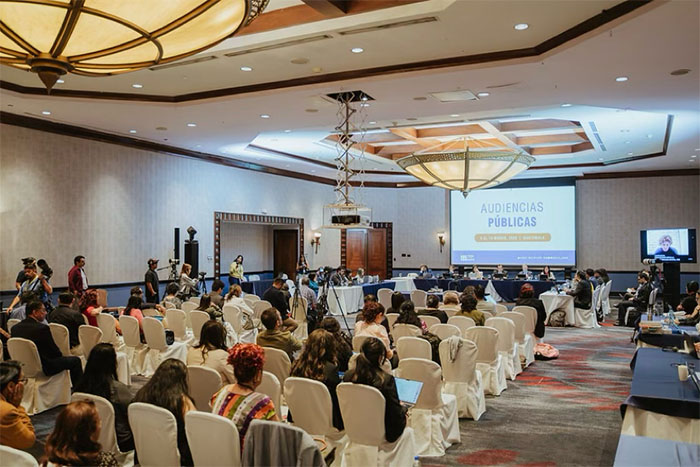
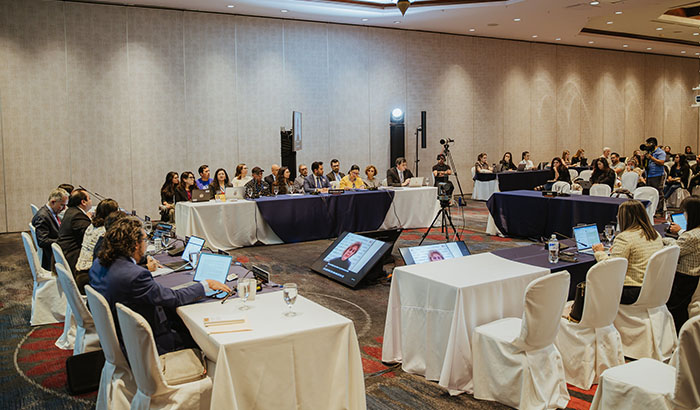
In March 2026, InterJust co-launched a report by the International Group of Experts for the Investigation of Human Rights Violations under the State of Exception in El Salvador (GIPES). This panel of independent international experts documented these abuses in detail and concluded that there are reasonable grounds to believe that crimes against humanity have been committed in El Salvador.
InterJust presented these findings before the 195th Period of Sessions of the Inter-American Commission on Human Rights (IACHR) and supported a side event at UN Human Rights Council Session in Geneva to bring El Salvador’s crisis before the international community.
We are now exploring cross-border legal pathways to bring cases on behalf of survivors before courts with the authority and the will to act. Combating violence with state violence is not a security policy. It is the dismantling of the rule of law and, increasingly, a matter for international justice.
In the news...
Frequently Asked Questions
What is happening in El Salvador?
Since 2022, the Salvadoran government has been using the State of Exception to combat gang violence in the country. However, the current security model has been accompanied by reports of widespread grave human right violations. The UN and civil society organisations have warned about mass arbitrary detentions, lack of due process, torture, and deaths in custody. What began as a security policy has become a system of abuse targeting not just suspected gang members, but dissidents, journalists, and ordinary civilians.
What do we mean by crimes against humanity in El Salvador?
Crimes against humanity are not isolated incidents. They refer to serious abuses such as enforced disappearances, murder, torture and violence against civilians committed as part of a widespread or systematic pattern.
Why does documenting these abuses matter?
Documentation helps preserve the truth, protect the voices of survivors, and build a record that can support future action. It also makes it harder for serious abuses to be denied or forgotten. In contexts like El Salvador, where fear and pressure can silence victims and human rights defenders, careful documentation is often one of the first steps toward justice and accountability.